FSH Online, Semarang Indonesia — The Faculty of Sharia and Law (FSH), Universitas Islam Negeri Walisongo Semarang, has strengthened its international academic engagement through the 2nd International Conference on Sharia Economic Law (ICOSHEL 2nd), held from 8–10 September 2026 at Pandanaran Hotel, Semarang.
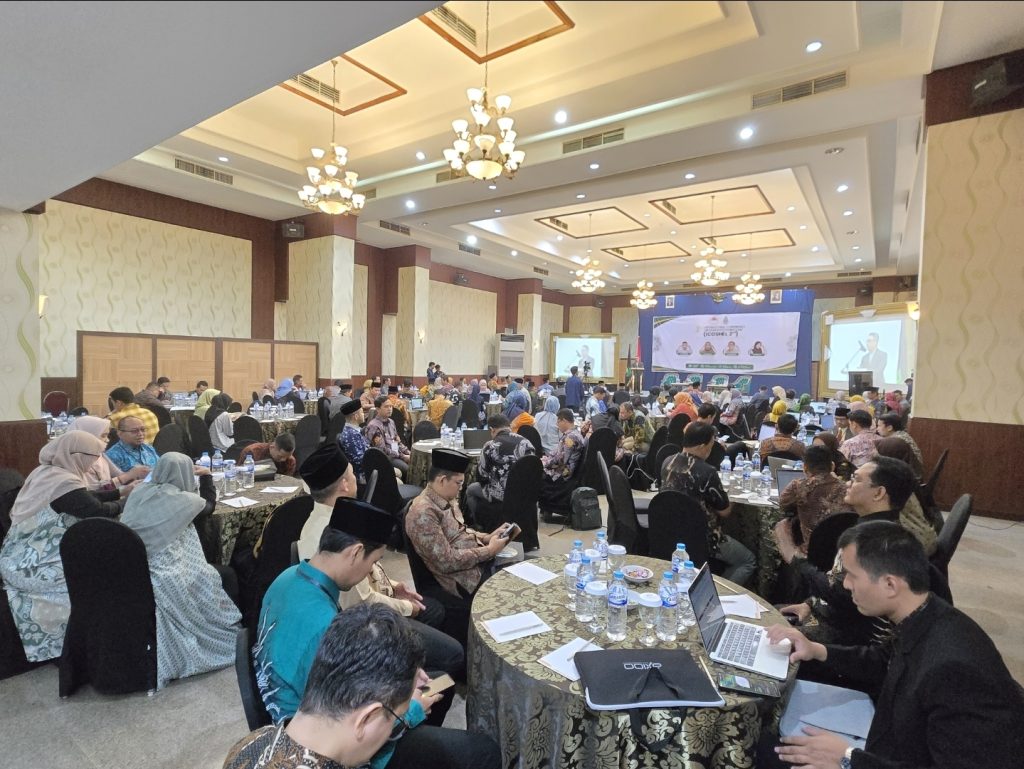
Under the theme “Sharia Economic Law, Global Halal Industry, and Environmental Sustainability: Toward Substantive Compliance for a Green Economy,” the conference brought together scholars, university leaders, policymakers, and experts to examine how Sharia economic law can respond to the rapidly changing landscape of the global halal industry and environmental governance.
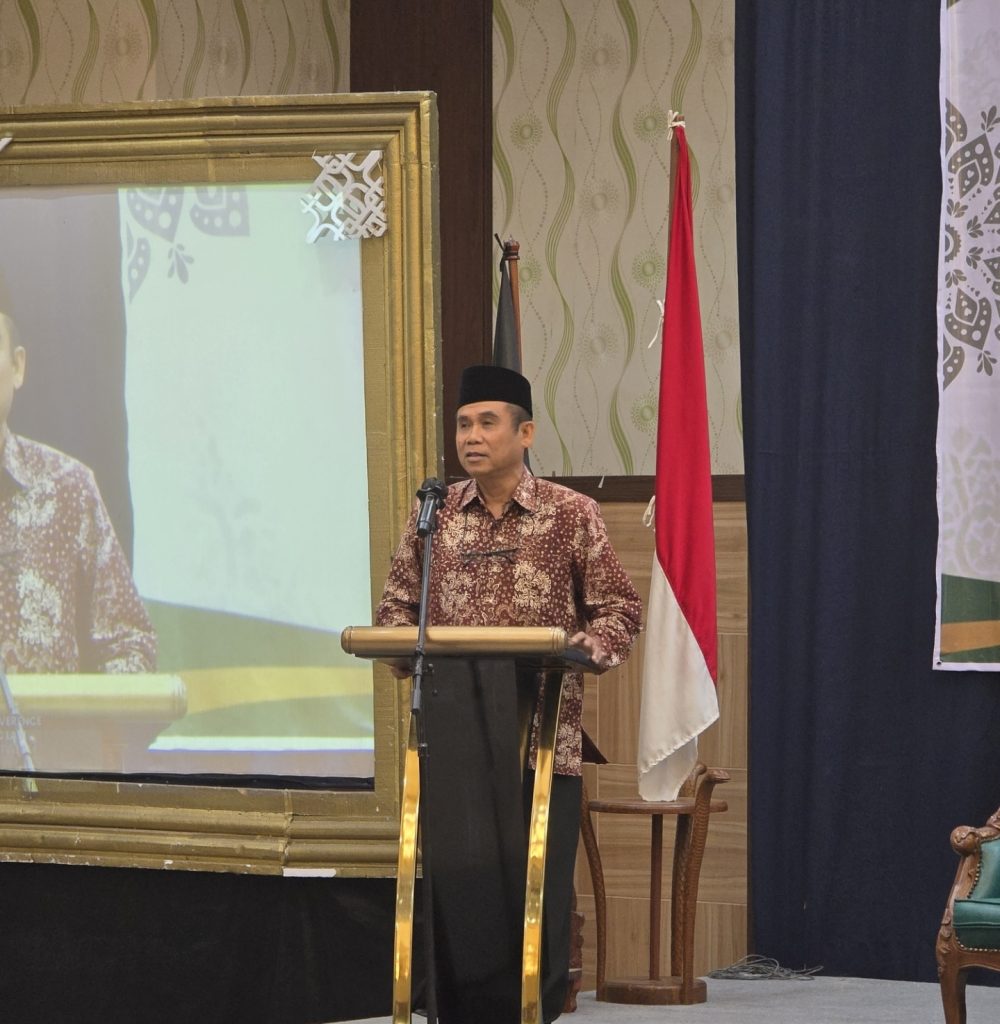
The conference was officially opened by the Rector of UIN Walisongo Semarang, Prof. Dr. H. Musahadi, M.Ag. The opening session also featured remarks from the Dean of the Faculty of Sharia and Law, Dr. H. Tolkah, M.A., and the Chair of POSDHESI, Dr. H. Abdul Mujib, M.Ag.
Participants included Deans of Sharia faculties and Heads of Sharia Economic Law programmes from universities across Indonesia, positioning ICOSHEL as an important platform for both academic exchange and institutional networking.
The conference featured an international and multidisciplinary panel consisting of Khalid Dadda of Miftah Al-Khair Association, Morocco; Assoc. Prof. Dr. Hj. Betania Kartika Muflih, B.A., M.A., from the International Institute for Halal Research and Training (INHART); and Dr. drh. Agung Suganda, M.Si., Director-General of Livestock and Animal Health at the Ministry of Agriculture of the Republic of Indonesia.
The session was moderated by Dr. Firqah Annajiyah Mansyuroh, M.H., lecturer in the Sharia Economic Law programme at UIN Antasari Banjarmasin.
Beyond Formal Halal Compliance
One of the central questions raised during the conference concerned the meaning of compliance in contemporary Islamic economic governance.
As the halal industry expands across food, finance, logistics, pharmaceuticals, tourism, and other sectors, the concept of halal is increasingly being examined beyond product certification alone. Scholars and policymakers are now confronted with wider questions involving supply-chain integrity, consumer protection, animal welfare, environmental impact, and social responsibility.
This is where the idea of substantive compliance becomes particularly significant.
Rather than understanding Sharia compliance merely as the fulfilment of formal legal or procedural requirements, substantive compliance emphasizes the broader objectives of Islamic law, including justice, public benefit, ethical responsibility, and the prevention of harm.
Dean of FSH UIN Walisongo Dr. H. Tolkah, M.A. emphasized that contemporary Sharia economic law must remain responsive to real-world transformations.
“Sharia economic law should not stop at formal compliance. It must also address the impact of economic activities on society, consumers, future generations, and the environment. This is where Islamic legal scholarship can make an important contribution to global discussions on sustainable development,” he said.
Connecting Halal Governance with Sustainability
The discussion also highlighted the growing intersection between halal governance and environmental sustainability.
Modern production systems increasingly demand traceability, food safety, responsible sourcing, ethical treatment of animals, efficient use of resources, and stronger environmental standards. These concerns are no longer separate from debates on halal governance.
In this context, the presence of experts from halal research, international civil society, and the Indonesian government created an interdisciplinary discussion that connected Islamic legal principles with regulatory practice and sustainability challenges.
The conference therefore moved beyond a conventional discussion of halal certification. Instead, it explored how the global halal ecosystem can contribute to a green economy—an economic model that seeks to balance growth, social welfare, ethical responsibility, and ecological sustainability.
This approach also reflects a broader transformation in Islamic economic studies. Questions of Sharia compliance are increasingly linked to global issues such as sustainable food systems, environmental ethics, supply-chain governance, and responsible consumption.
Strengthening an International Academic Ecosystem
For FSH UIN Walisongo, ICOSHEL 2nd represents more than an annual academic event.
The conference is part of the Faculty’s wider strategy to create an academic environment in which Islamic legal scholarship engages directly with contemporary global challenges.
By bringing together academics, professional associations, government officials, and international speakers, FSH seeks to strengthen interdisciplinary research and expand international scholarly networks in Sharia economic law.
The conference also provides an important space for Indonesian Sharia faculties and academic programmes to build stronger collaboration in curriculum development, research, publication, and institutional partnerships.
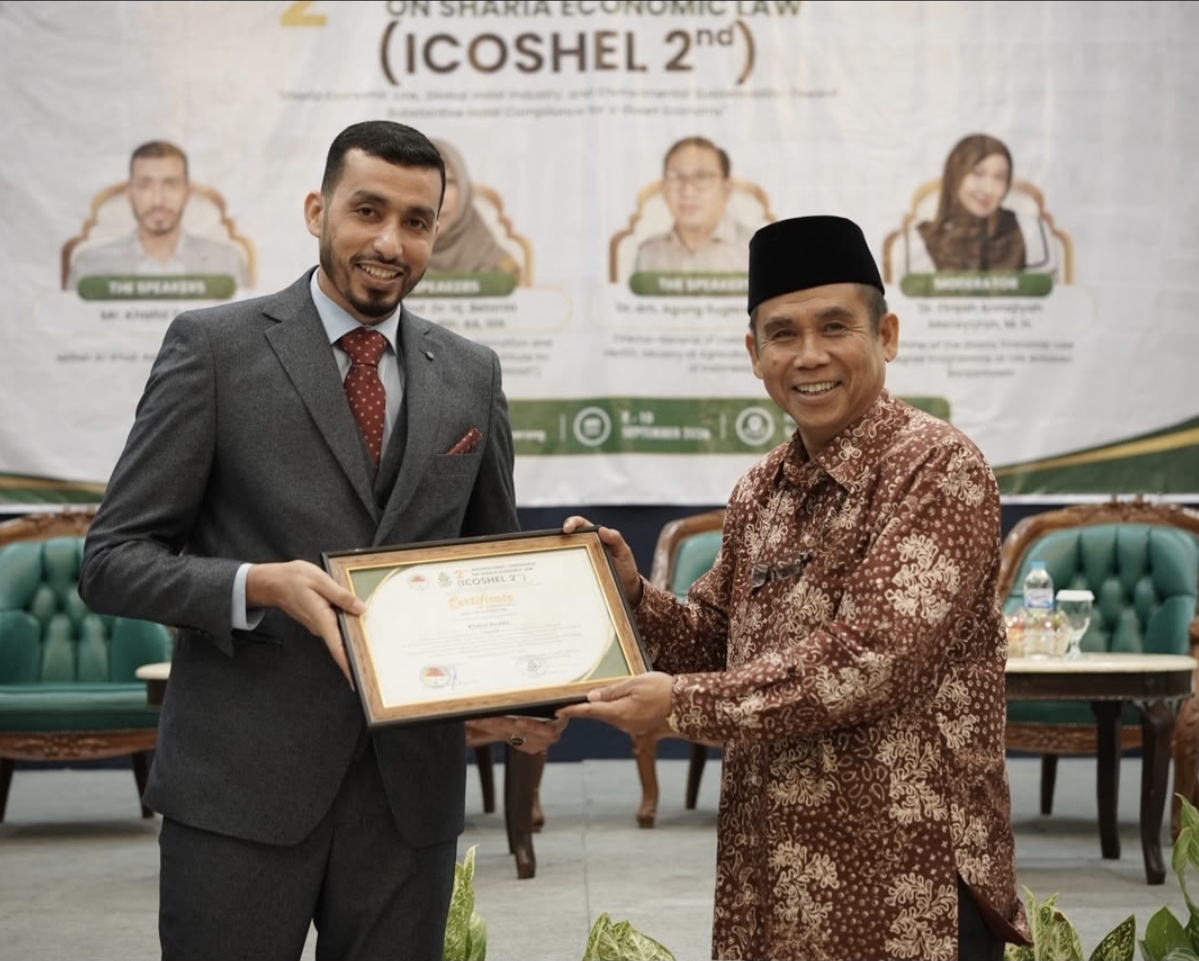
During the event, appreciation awards and commemorative gifts were presented to the speakers by the Rector of UIN Walisongo, the Dean of FSH, and the Chair of POSDHESI.
ICOSHEL 2nd ultimately sends a broader message to the international academic community: the future of Sharia economic law lies not only in defining what is legally permissible, but also in examining whether economic systems are socially just, ethically responsible, and environmentally sustainable.
Through this conference, the Faculty of Sharia and Law at UIN Walisongo Semarang positions Islamic legal scholarship within a wider global conversation one that connects Sharia, halal governance, sustainability, and the future of the green economy.